
How Vienna is Rethinking Urban Food
October 1, 2026|MP
What does the future of food taste like? In Vienna, it might be soft, delicate tofu freshly made at the market; a rich, savoury alternative to seafood; or an unexpected aperitif made with lichens. Across the city, founders, producers, researchers and chefs are experimenting with new ingredients, flavours and ways of making food – showing that a more sustainable and resilient food system can also be delicious.
We want food that is nutritious, affordable and enjoyable – but how it is produced and consumed matters too. Food systems are closely connected to greenhouse gas emissions, resource use and health, while cities depend on reliable supply chains. What ends up on our plates therefore has consequences far beyond the kitchen table.
The City of Vienna is working to accelerate the transition towards more sustainable food innovation, production and distribution. This is where Vienna Food Innovation at the Vienna Business Agency comes in: food businesses can access expert advice and support in finding research partners, infrastructure, financing and relevant networks, alongside formats such as the Founders Lab Food, co-creation activities and community events.
Across Vienna, this shift is already visible – in university laboratories and production facilities, at market stalls and in restaurants, and in businesses experimenting with entirely new ingredients. The Food Innovation in Vienna report maps this diverse ecosystem and the people and organisations shaping it.
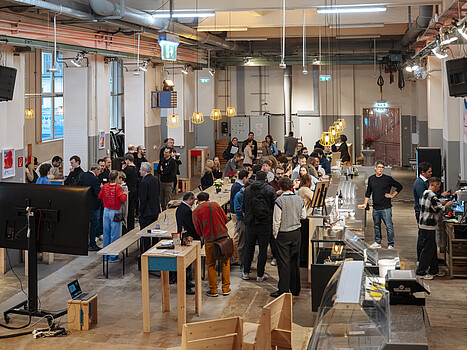
Where new ideas begin: research and development
Behind many new food products and production methods lies a strong research ecosystem – and Vienna has one spanning everything from alternative proteins to more resource-efficient production.
At BOKU University, for example, food innovation brings together technological, ecological, economic and social perspectives. Its Food & Bio Processing Core Facility allows researchers and companies to test and scale processing technologies at pilot level. The Austrian Centre of Industrial Biotechnology (acib) takes a similarly application-oriented approach, connecting research with industry in fields such as alternative proteins and the use of production side streams.
And some of those ideas are already finding their way onto plates and into glasses.
High-tech food, old-fashioned delicious
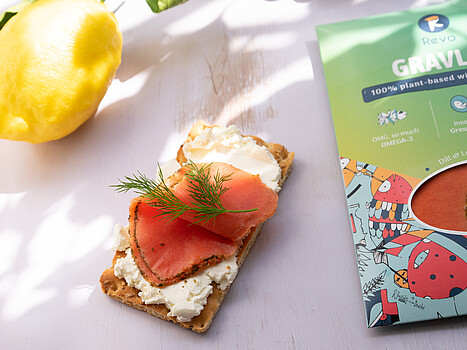
New food technologies show how research can become edible – and delicious. Vienna-based Revo Foods, for example, uses innovative processing technologies to create mouthwatering alternatives inspired by octopus, salmon and black cod, all based on alternative proteins.
Simiæn takes a very different route: its drinks are made with lichen, an unusual raw material that emerged from research into new food sources and now lends itself to forest-inspired botanical flavours.
Then there is Kern Tec, which gives stone-fruit kernels a second life by processing them into oils, pastes and powders. These ingredients can be turned into creamy spreads, plant-based drinks, cheese alternatives and salad oils – transforming what was once a waste product into something worth savouring.
Together, these businesses turn new technologies and overlooked resources into entirely new flavours, textures and things worth tasting.
Changing tastes, changing markets
Changing tastes are more than a consumer trend – for entrepreneurs, they can open the door to entirely new product categories.
Interest in sustainability, provenance and health is growing, while plant-based foods, fermented products, functional ingredients and alcohol-free alternatives are becoming increasingly visible. Vienna’s food scene reflects that shift. trinkMISCHE, a participant in the Vienna Business Agency’s Founders Lab Food, develops fermented non-alcoholic beverages, while other young companies are experimenting with probiotic products, alternative ingredients and new drink concepts.
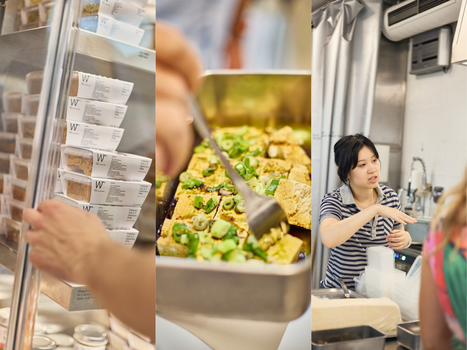
The change is also visible beyond the product itself – in the places where food is made, sold and served. At Wiener Tofu, Austrian soybeans are turned into fresh tofu directly at Karmelitermarkt – soft, delicate and made just a few steps from where it is sold.
Innovation can also change how people access food. At MILA Mitmach-Supermarkt, members do more than shop: as co-owners of the cooperative, they help shape the assortment and contribute to running the supermarket. It is a different way of connecting consumers, producers and retailers, with participation built into the business model.
Gastronomy brings those ideas to the table. Restaurants such as &flora show how plant-focused cooking and new approaches to ingredients can become part of everyday dining. Here, food innovation becomes tangible – and tastes as exciting as the ideas behind it: fresh, vibrant and full of flavour.
How to taste the future – right now
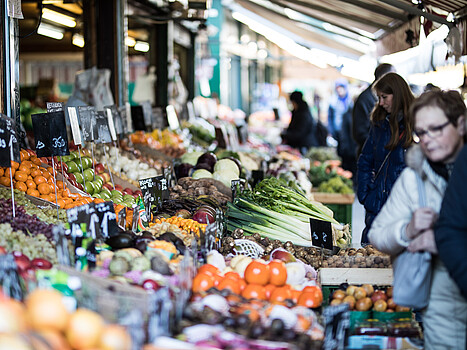
After all, food innovation is not meant to stay in laboratories or reports – it is meant to be tasted. From 1 to 10 October, the Vienna Future Food Week turns the city into a meeting place for contemporary food culture, with more than 40 events bringing together chefs, producers, designers, restaurateurs, winemakers and food creatives from Vienna and beyond.
One of its stops is Vienna Food Innovation: Future Market on 9 October at Markterei Markthalle. More than 15 Viennese companies including Revo Foods, Simiæn, trinkMISCHE, and others will present their products at the market stalls, inviting visitors to taste, discover and talk directly to the people behind them. Entry is free and no registration is required.
Vienna’s food innovation ecosystem shows that there is no single recipe for a more resilient food system. Change happens in research labs, production spaces, shops, restaurants and communities across the city – and sometimes the best way to understand where food is heading is simply to take a bite.